
Jerky and Pet Treat Packaging: Choosing Bags That Keep Product Fresh
Oily, sharp edged and opened again and again, jerky and pet treats are hard on packaging. Here’s how to pick a bag that keeps them fresh, sells on the shelf and stands up to real use.
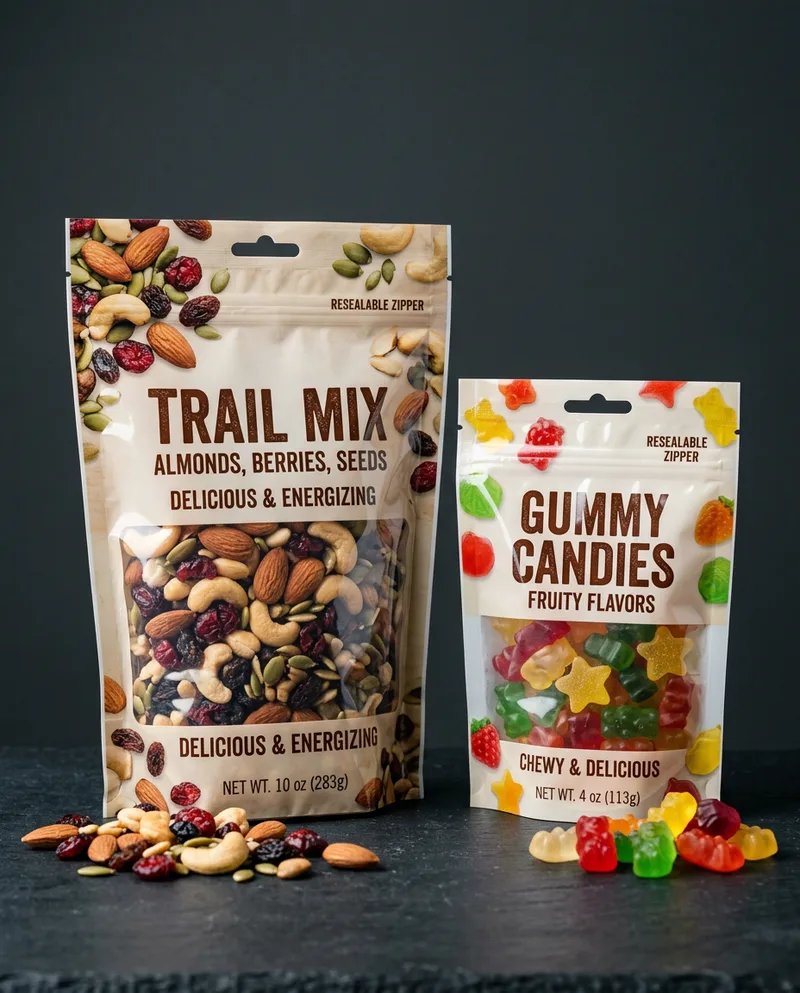
What actually goes wrong with jerky and treat packaging
Jerky, meat sticks and dried pet treats are tough on packaging. They are oily, often sharp edged, sometimes still slightly moist, and they are usually bought in multi-serving bags that get opened and closed for days. When packaging fails, it shows up in a few predictable ways:
- Rancid or stale flavour. Fat reacts with oxygen. The more oxygen that reaches the product, the sooner it tastes off.
- Mould. Moisture getting in, or moisture left in the product, gives mould a chance.
- Grease marks. Oil can soak into or stain packaging that isn’t built to resist it, especially paper outers.
- Punctures. Hard, pointy pieces and bone-shaped chews can pierce thin film, and a pinhole lets oxygen in.
- Faded product. Light speeds up colour and flavour loss, which matters if your bag has a big clear window.
The right bag solves each of these. Here’s how to think it through.
Packaging protects quality. It doesn’t make product safe.
Before talking bags, one point that matters more than any film choice: shelf stability comes from how the product is made. For meat jerky, the U.S. Department of Agriculture’s Food Safety and Inspection Service jerky compliance guideline says a water activity critical limit of 0.85 or lower should be targeted for shelf stable product stored in contact with air, and it notes that products stored without oxygen are a different case with their own considerations. In Canada, meat processing and food safety controls are regulated by the Canadian Food Inspection Agency, and your process authority or food safety advisor should set the targets for your product.
A great bag will slow down staling, rancidity and moisture pick up. It won’t fix under-dried product, and removing oxygen from a pack changes the food safety picture rather than ending the conversation. Get the product right first, then choose packaging that keeps it that way.
Choosing the barrier
For oily, oxygen sensitive products, barrier is the most important decision. In broad terms:
- Foil laminates (for example PET / foil / PE) give the highest barrier to oxygen, moisture and light. They’re the safest choice for long shelf life and for products shipped and stored for months.
- Metallized films are close behind and cost a little less. A good fit for many jerky and treat brands.
- Clear high barrier films show off the product but let light through. They suit fast-selling product where the look sells the bag.
- Kraft-look bags are popular for natural and pet brands. The paper is just the outside; what protects the product is the barrier film inside. Make sure there is one, and that the inner layer resists grease.
Our Mylar bags 101 guide explains OTR and MVTR, the two numbers used to compare barrier between films.
Windows: sell the product, protect the product
Shoppers like to see jerky and treats before they buy. A window does that, but it is also the weakest point for light and, depending on the film, oxygen. Two common compromises: keep the window small and place it where the product sits, or use a clear window on fast moving lines and a fully opaque bag for products that sit longer. If you want customers to see the product but need a long shelf life, an opaque bag with a good photo on the front is often the better answer.
Oxygen absorbers, desiccants and nitrogen flushing
These three are often confused:
- Oxygen absorbers are small packets, usually containing iron powder, that react with and remove oxygen inside a sealed pack. They need a high barrier bag to be worthwhile; in a leaky bag they simply keep absorbing until they’re used up. They start working as soon as they meet air, so open them right before sealing and keep spares airtight.
- Desiccants absorb moisture, not oxygen. They are useful for very dry, crunchy treats in humid storage. They are not a substitute for an oxygen absorber.
- Nitrogen flushing replaces the air in the bag with nitrogen as it is filled and sealed. It is done on packaging lines rather than by hand, so it’s usually a job for a co-packer. Our partner Copacker.ca handles filling and sealing.
Whichever you use, make sure the oxygen reduction is part of your validated process, for the food safety reason above. Any packet placed inside a food bag also needs to be food grade and suitably labelled, for example “do not eat”.
Features that matter for multi-serving bags
- Zipper. Almost essential for treats and jerky, which are rarely eaten in one sitting. A good press to close zipper keeps air out between servings. See the options on our food packaging page.
- Tear notch. Lets customers open the bag cleanly above the zipper without scissors.
- Hang hole. Pet stores, convenience stores and gas stations often merchandise jerky and treats on pegs. A round or sombrero hang hole gets you onto that rack.
- Stand up gusset. A stand up pouch shelves well and holds more product for its height. Flat pouches work for single servings and samples.
- Thicker film. If your product has sharp edges or hard chews, a thicker structure resists punctures better. Thickness alone isn’t the whole story, though; a thinner foil bag can out-perform a thicker bag with no barrier layer.
Sizing a bag for jerky and treats
Jerky and treats are bulky for their weight and vary a lot piece to piece, so size by volume, not just by grams. Fill a sample bag with your real product at your target weight, leave room at the top for the zipper and seal, and check that it still stands up neatly. Our mylar bag size guide has a size finder for jerky and other foods, and we can send samples to test with your product.
Labelling notes for Canada
Human food sold in consumer packages in Canada must meet federal food labelling rules, including bilingual mandatory information and a metric net quantity; the CFIA labelling checklist covers the details. Pet food labelling generally falls under the Consumer Packaging and Labelling Act, and the Competition Bureau publishes a guide to labelling and advertising pet foods; note that the guide itself says it covers dog and cat food and does not cover pet treats. Treat this as general information and confirm what applies to your product. Our food labelling checklist is a handy starting point when you plan your artwork.
The short version
- Make the product shelf stable first; packaging protects quality, not safety.
- Choose foil or metallized barrier for oily products that need to last.
- Use a grease resistant inner layer, especially with kraft outers.
- Keep windows small, or skip them for long shelf life lines.
- Add a zipper, tear notch and hang hole for real world use.
- Use oxygen absorbers or nitrogen flushing as part of a validated process.
Ready to price bags for your jerky or treats? Request a quote or ask for samples, and tell us your product, weight and how long it needs to last. We’ll suggest the structure that fits.
Common questions
Don’t see yours? Ask it in the quote form and a real person will answer.
Do I need an oxygen absorber in a jerky bag?
Many brands use oxygen absorbers or nitrogen flushing to slow rancidity, but only in a high barrier bag and as part of a validated process. Removing oxygen changes the food safety picture, so set it up with your process authority.
What kind of bag is best for jerky?
A foil or metallized stand up pouch with a grease resistant inner layer, a press to close zipper and a tear notch suits most jerky. Add a hang hole if it will be sold on pegs.
Can I use kraft paper bags for pet treats?
Yes, as long as the kraft is only the outer layer and there is a barrier film inside that resists grease. Paper on its own lets oil and oxygen through.
Should jerky bags have a clear window?
A window helps sell the product but lets in light and, depending on the film, more oxygen. Keep windows small or use an opaque bag for products that need a long shelf life.
Ready to see pricing?
Send us a few details and we’ll come back with options and real numbers. No pressure and no endless back and forth.