
Recyclable vs Compostable Pouches in Canada: What Brands Can Honestly Claim
Customers keep asking for greener packaging. Here’s what recyclable and compostable pouches really offer, where they’re collected in Canada, and what you can legally say on the bag.
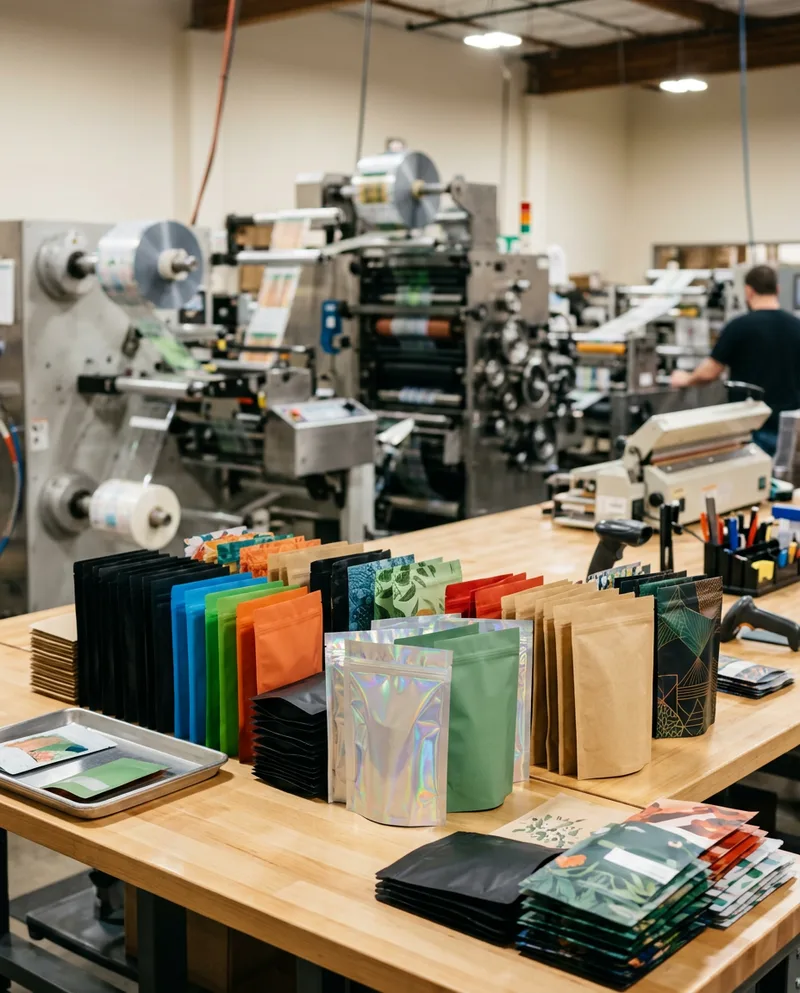
The honest problem with classic mylar bags
A classic mylar bag is a laminate: a printable outer film (often polyester), a barrier layer of aluminum foil or metallized film, and a polyethylene sealing layer, all bonded together. That combination is why mylar protects coffee, cannabis and dry food so well. It is also why it is hard to recycle. Recycling works best when a package is made of one kind of material, and a multi-material laminate can’t easily be separated back into its layers.
So if your customers are asking for “eco friendly” packaging, the answer isn’t a single magic bag. It is a set of trade offs between barrier, shelf life, cost and what your customers can actually do with the bag once it is empty. This guide explains the main options and what you can truthfully say about each in Canada.
Recyclable pouches: mono-material films
The main route to a recyclable pouch is a mono-material structure, where every layer belongs to the same plastic family. The most common is all-polyethylene (PE), and there are also all-polypropylene (PP) designs. Because the whole bag is one family of plastic, it can be processed in streams that accept flexible plastic.
The catch is barrier. Polyethylene on its own lets oxygen and moisture through far more easily than foil. Converters close some of that gap with thin barrier coatings or very thin functional layers designed to stay compatible with recycling, but a mono-material pouch generally won’t match a foil laminate for long shelf life. It can be a very good fit for products that sell through in weeks or a few months, like granola, candy, snacks and many powders. It’s a harder fit for products that are sensitive to oxygen or need a long shelf life.
Where flexible packaging is actually collected
A pouch is only recyclable in practice if your customers have somewhere to take it, and in Canada that depends on the province and even the municipality, because residential recycling is run by provincial programs.
British Columbia is a useful example. Recycle BC’s flexible plastics list accepts stand up and zipper lock pouches, crinkly wrappers and bags, and packaging with a plastic seal. These go to depots, or into home collection where a community offers flexible plastics service. The same list says Recycle BC does not accept packaging labelled biodegradable, compostable or oxo-degradable, or plastic-lined paper and paper-lined plastic, in that stream.
Other provinces have their own programs and lists. Before you print a recycling message on a bag, check the rules where most of your customers live, and word the message so it tells people what to do (for example, where to take the bag) rather than making a broad promise.
Compostable pouches
Compostable pouches are made from materials designed to break down in composting conditions. Many use a kraft paper outer layer with a compostable film inside. A credible compostable claim rests on testing to a recognized standard, such as ASTM D6400 or EN 13432, or Canada’s CAN/BNQ 0017-088, and many brands use third party certification marks that reference those standards.
Two things are worth knowing before you choose compostable:
- Industrial versus home composting. Most certified compostable packaging is designed for industrial facilities, which run hotter and more controlled than a backyard bin. “Home compostable” is a separate, stricter claim with its own certifications.
- Acceptance varies. Many municipal green bin programs do not accept compostable packaging, even when it is certified. If your customers can’t put it in a green bin, a compostable bag may end up in the garbage.
Compostable structures also tend to have a lower barrier and a shorter usable shelf life than foil, and some are sensitive to heat and humidity in storage. They suit dry products that sell quickly. Remember, too, that a compostable pouch is a different product from a recyclable one: in BC, for example, it can’t go in the flexible plastics stream.
What you can say on the bag: Canada’s greenwashing rules
This is where brands most often get into trouble. On June 20, 2024, amendments to the Competition Act added provisions that explicitly target greenwashing. According to the Competition Bureau’s guidance on environmental claims, a claim about a product’s environmental benefits must be based on adequate and proper testing done before the claim is made, and, like any marketing claim, it can’t be false or misleading. The Bureau published final guidelines on environmental claims in June 2025.
In practical terms for packaging:
- Be specific. “Recyclable where flexible plastics are collected” or “Made with a mono-PE structure” is better than “eco friendly” or “green”.
- Keep your evidence. Hold on to supplier documentation for the structure, any certification, and the test results behind it.
- Don’t imply the whole package does something only one part does. If the zipper, valve or label is a different material, say so or design around it.
- Avoid vague symbols. A chasing arrows symbol or a leaf graphic can create an impression you have to be able to back up.
This is general information, not legal advice. If a claim is central to your marketing, have it reviewed.
How to choose: a simple decision path
- Start with the product. How sensitive is it to oxygen, moisture and light, and how long does it need to last on the shelf and in the customer’s pantry?
- Decide the minimum barrier you need. Coffee, cannabis and long term food storage usually need foil or a high barrier film. Fast-moving dry snacks often don’t.
- Check where your customers are. If most live where flexible plastics are collected, a mono-material recyclable pouch can carry a meaningful message. If they have compost programs that accept certified packaging, compostable may make sense.
- Reduce first. Right-sizing the bag uses less material whatever it is made of. Our mylar bag size guide helps you avoid a bag that is bigger than it needs to be.
- Write the claim last. Once the structure is chosen, write a specific, provable message for the artwork.
Don’t forget the advantages of the bag you have
Flexible packaging, mylar included, uses far less material than glass, tins or rigid plastic and is light to ship. For products that genuinely need a high barrier, a foil bag that prevents spoilage may be the better environmental choice than a weaker bag that lets the product go stale and get thrown out. The right answer is the one that protects the product for as long as it needs and gives your customers an honest end of life message.
We make foil, metallized, kraft, clear, recyclable and compostable structures. Weighing a switch? Tell us about your product and shelf life in the quote form and we’ll tell you honestly which structures fit, including when a classic foil custom mylar bag is still the right call. For a deeper look at layers and barrier, see Mylar bags 101.
Common questions
Don’t see yours? Ask it in the quote form and a real person will answer.
Are mylar bags recyclable?
Classic mylar bags are laminates of different materials, such as polyester, aluminum and polyethylene, which makes them hard to recycle in most programs. Mono-material polyethylene or polypropylene pouches are designed to be recyclable where flexible plastics are collected.
Is a compostable pouch better than a recyclable one?
It depends on your product and your customers. Compostable pouches suit dry products that sell quickly, but many municipal green bin programs do not accept compostable packaging. Recyclable mono-material pouches only help where flexible plastics are collected.
Can I print “eco friendly” on my pouch in Canada?
Vague claims are risky. Since June 20, 2024 the Competition Act requires claims about a product’s environmental benefits to be based on adequate and proper testing. Specific, provable statements are safer than general ones.
Do recyclable pouches keep food as fresh as foil mylar bags?
Generally not. Foil laminates have the lowest oxygen and moisture transmission of common flexible packaging. Mono-material pouches with barrier coatings work well for many products but usually offer a shorter shelf life than foil.
Ready to see pricing?
Send us a few details and we’ll come back with options and real numbers. No pressure and no endless back and forth.