
Mylar Bags vs Stand-Up Pouches: Is There Actually a Difference?
A practical guide for Canadian brands covering key mylar bags considerations, specifications and quote-preparation tips.
Published October 5, 2026
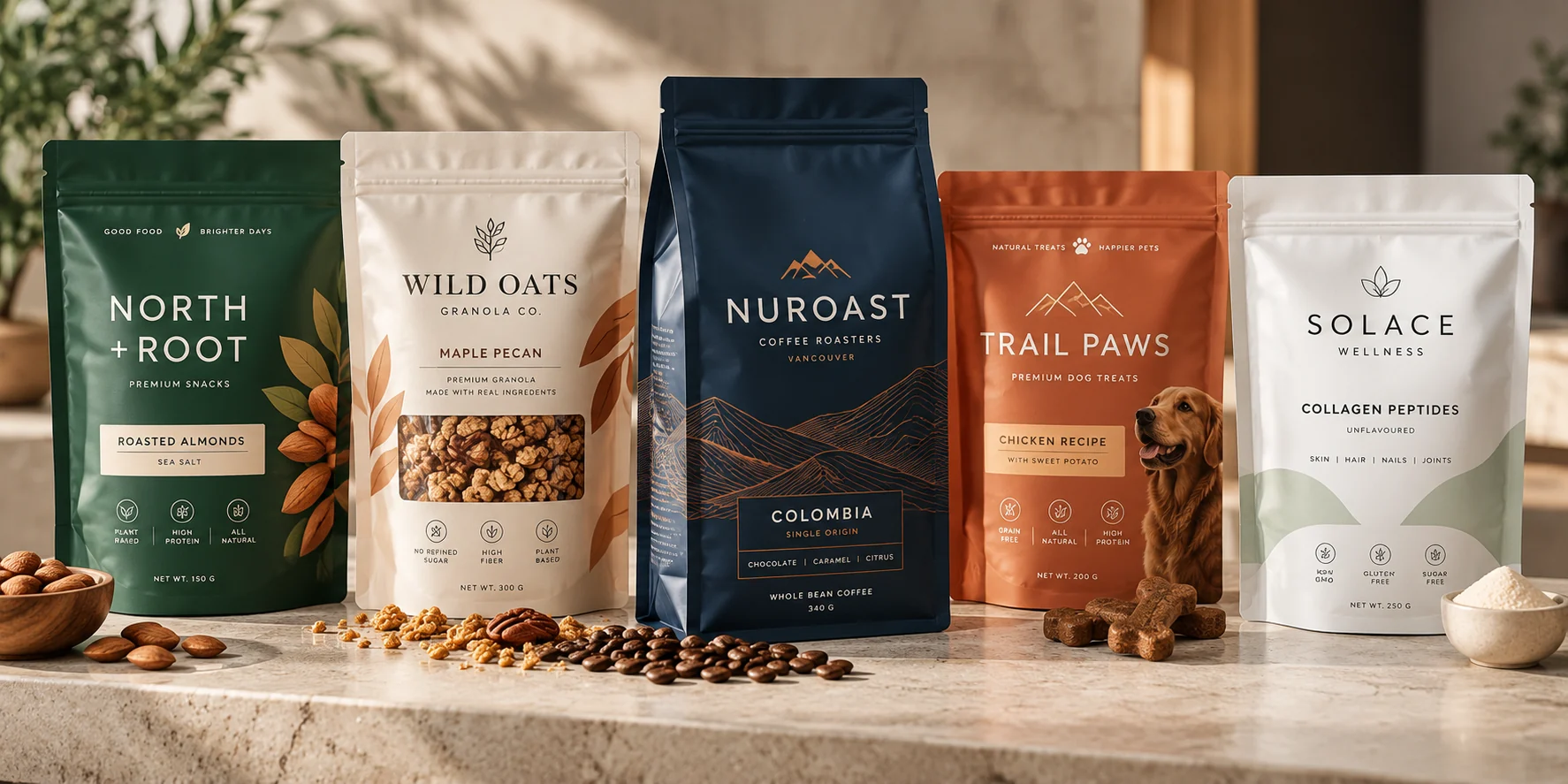
Mylar Bags vs Stand-Up Pouches: Is There Actually a Difference?
If you are sourcing packaging for a Canadian brand, you have likely run into a confusing overlap of terminology. Some suppliers talk endlessly about "Mylar bags," while others steer you toward "stand-up pouches." You might find yourself wondering if these are two entirely different packaging formats, or if they are simply different names for the exact same thing.
The short answer is: they are not mutually exclusive, but they are not identical either. Comparing Mylar bags to stand-up pouches is like comparing Gore-Tex to a rain jacket. One refers to the specific material technology, while the other refers to the physical shape and structural design of the container.
Understanding this distinction is crucial for brand managers, product developers, and procurement specialists. Choosing the wrong combination of material and structure can lead to premature product spoilage, poor shelf presence, or unnecessary packaging costs. Let us break down the science, the structures, and the practical applications to help you make an informed decision for your product line.
What is Mylar? Understanding the Material
To understand what a Mylar bag is, we have to look at the material science. "Mylar" is actually a trademarked brand name owned by Dupont Teijin Films for a specific type of stretched polyester film known as BoPET (biaxially-oriented polyethylene terephthalate). Over the decades, the term "Mylar" has become a genericised trademark within the packaging industry, much like "Kleenex" is used for facial tissues or "Band-Aid" for adhesive bandages.
In the context of modern flexible packaging, when professionals refer to a Mylar bag, they are talking about a bag constructed from multi-layered plastic laminates that include a high-performance polyester layer. This polyester layer is frequently metallised with a microscopic layer of aluminium, giving the material its characteristic shiny, metallic appearance.
The primary benefit of this material is its exceptional barrier properties. The dense molecular structure of BoPET, especially when combined with aluminium foil or metallised layers, creates an incredibly tight shield. This shield protects the contents from:
- Oxygen: Prevents oxidation, which causes oils to go rancid and food to spoil.
- Moisture: Keeps dry goods crisp and prevents powdered products from clumping.
- Light: Blocks ultraviolet (UV) rays that degrade organic compounds, colours, and active ingredients.
Because of these intense protective qualities, Mylar is the foundation of most high-performance high-barrier packaging solutions on the market today.
What is a Stand-Up Pouch? Understanding the Structure
While Mylar refers to what the bag is made of, a stand-up pouch refers to how the bag is shaped and how it behaves on a retail shelf.
A stand-up pouch is a structural format defined by its bottom gusset. When the pouch is empty, it lies flat. However, when it is filled with product, the bottom gusset expands, creating a stable base that allows the package to stand upright on its own.
This structural design revolutionized the retail packaging landscape for several reasons:
- Shelf Visibility: Standing upright allows the front panel of the package to face the consumer directly, maximizing billboard space for branding and graphics.
- Space Efficiency: They take up less space on retail shelves and in shipping boxes compared to rigid containers like glass jars or tin cans.
- User Convenience: They are lightweight, easy to open, and frequently feature press-to-close zippers or tear notches for easy consumer access.
Crucially, a stand-up pouch can be made from many different materials. It can be made from clear plastic laminates, kraft paper composites, recyclable mono-materials, or indeed, high-barrier Mylar.
The Intersection: Mylar Stand-Up Pouches
Now that we have separated material from structure, the overlap becomes clear. A package can easily be both a Mylar bag and a stand-up pouch.
In fact, the vast majority of premium retail packaging in industries like specialty coffee, pet treats, and organic snacks consists of Mylar stand-up pouches. By laminating a high-barrier Mylar core layer with a printable outer layer (such as matte-finished BOPP) and a food-safe inner sealant layer (such as Cast Polyethylene), manufacturers create a package that stands beautifully on a shelf while offering maximum shelf-life protection.
When you browse options for custom mylar bags, you are typically choosing from various structural formats—including flat pouches (three-side seal), side-gusseted bags, and stand-up pouches—all utilizing the protective benefits of metallised or high-barrier polyester films.
Key Comparison Points: Material vs. Format
To help guide your procurement process, let us compare how material choices and structural choices impact your final package performance across key operational metrics.
1. Shelf Life and Preservation
If your primary goal is long-term preservation (such as freeze-dried emergency food storage or highly sensitive organic ingredients), the material is your most critical decision. You require a true Mylar laminate with an aluminium foil or metallised polyester layer to block 100% of light and oxygen. The physical format—whether it stands up or lies flat—is secondary to the barrier strength of the film itself.
2. Retail Presentation and Merchandising
If your product is destined for competitive retail shelves (such as grocery stores, boutique shops, or dispensaries), the structural format is paramount. A flat bag lying down on a shelf is difficult for consumers to see and often looks disorganized. A stand-up pouch presents your brand front-and-centre, making it the industry standard for modern retail merchandising.
3. Transparency and Windows
Sometimes, you want consumers to see your product inside the bag. Traditional metallised Mylar is completely opaque because of the aluminium layer. If you require a clear window, you cannot use a standard metallised Mylar. Instead, you must use a clear high-barrier laminate (often utilizing silicon oxide or metal-free barrier coatings) built into a stand-up pouch structure. This gives you a balance of moderate barrier protection and product visibility.
Choosing the Right Fit for Your Industry
Different industries have developed distinct packaging standards based on their unique product characteristics and distribution channels.
Food and Confectionery
For everyday snacks, dried fruits, and baked goods, standard plastic or paper-laminated stand-up pouches are highly popular. However, for items sensitive to moisture loss or oil oxidation, upgrading to a Mylar-lined barrier film is essential to prevent staleness. You can explore specialized material combinations designed specifically for food preservation in our food packaging section.
Specialty Coffee and Tea
Coffee beans are highly sensitive to oxygen and release carbon dioxide after roasting. The industry standard for premium coffee is a side-gusseted or flat-bottom stand-up pouch constructed with a thick Mylar barrier layer and an integrated one-way degassing valve. This setup keeps oxygen out while allowing built-up gases to escape safely without bursting the bag.
Regulated and Sensitive Products
For products that require strict access control or protection from children, the packaging structure must incorporate specialized locking zippers. These child-resistant features are commonly integrated into heavy-duty Mylar pouches to ensure both physical security and chemical preservation. Note that regulatory compliance requirements for child-resistant packaging depend entirely on the exact package design, the specific product, your target market, and the local jurisdiction.
How to Prepare for Sourcing Your Packaging
When you are ready to transition from concept to production, having your technical requirements organized will save you time and prevent costly miscommunications with your packaging partner. Use this checklist to prepare your specifications before requesting a quote.
- Product State: Is your product a dry powder, a liquid, oily, sharp, or chunky? (This dictates the inner sealant layer thickness).
- Target Shelf Life: How long does your product need to remain fresh on the shelf? (This determines if you need standard barriers or ultra-high Mylar foil barriers).
- Filling Method: Will you be filling the bags by hand, using a semi-automated funnel, or running them through a fully automated form-fill-seal machine?
- Dimensions: What are the width, height, and bottom gusset measurements you require? (It is highly recommended to test physical product samples in blank template bags first).
- Aesthetic Finishes: Do you require a spot metallic effect, a soft-touch matte finish, or a glossy varnish?
- Special Features: Do you need tear notches, hang holes, resealable zippers, or one-way degassing valves?
Work With a Trusted Packaging Partner
Navigating the intersection of material science and structural design does not have to be a guessing game. Whether you need a simple, clear stand-up pouch for short-term retail display or a heavy-duty, custom-printed Mylar bag designed to protect sensitive ingredients over a long shelf life, getting the specifications right from the start is the key to your brand's success.
Our team is here to help you translate your product requirements into the perfect physical package. We can assist you in balancing barrier performance, aesthetic appeal, and budget constraints to create a custom solution tailored to your brand.
Ready to discuss your project specifications or get pricing for your custom run? Head over to our quote page to request a quote, and one of our packaging specialists will guide you through the process.